Exploration Place Parkrun: A Free 5k Event Promoting Community and Well-being

Every Saturday morning, dozens of runners, joggers, and walkers of all ages gather together for the Exploration Place Parkrun. It’s a weekly timed 5km distance that’s part of an international movement encouraging people to lace up their shoes and move towards a happier and healthier lifestyle.

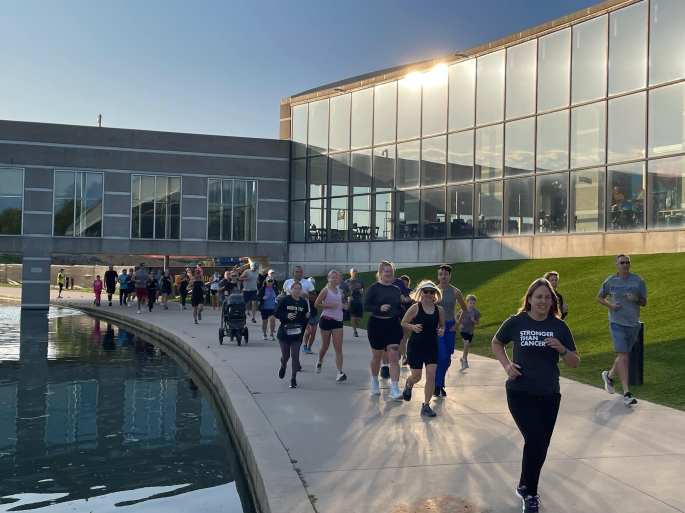
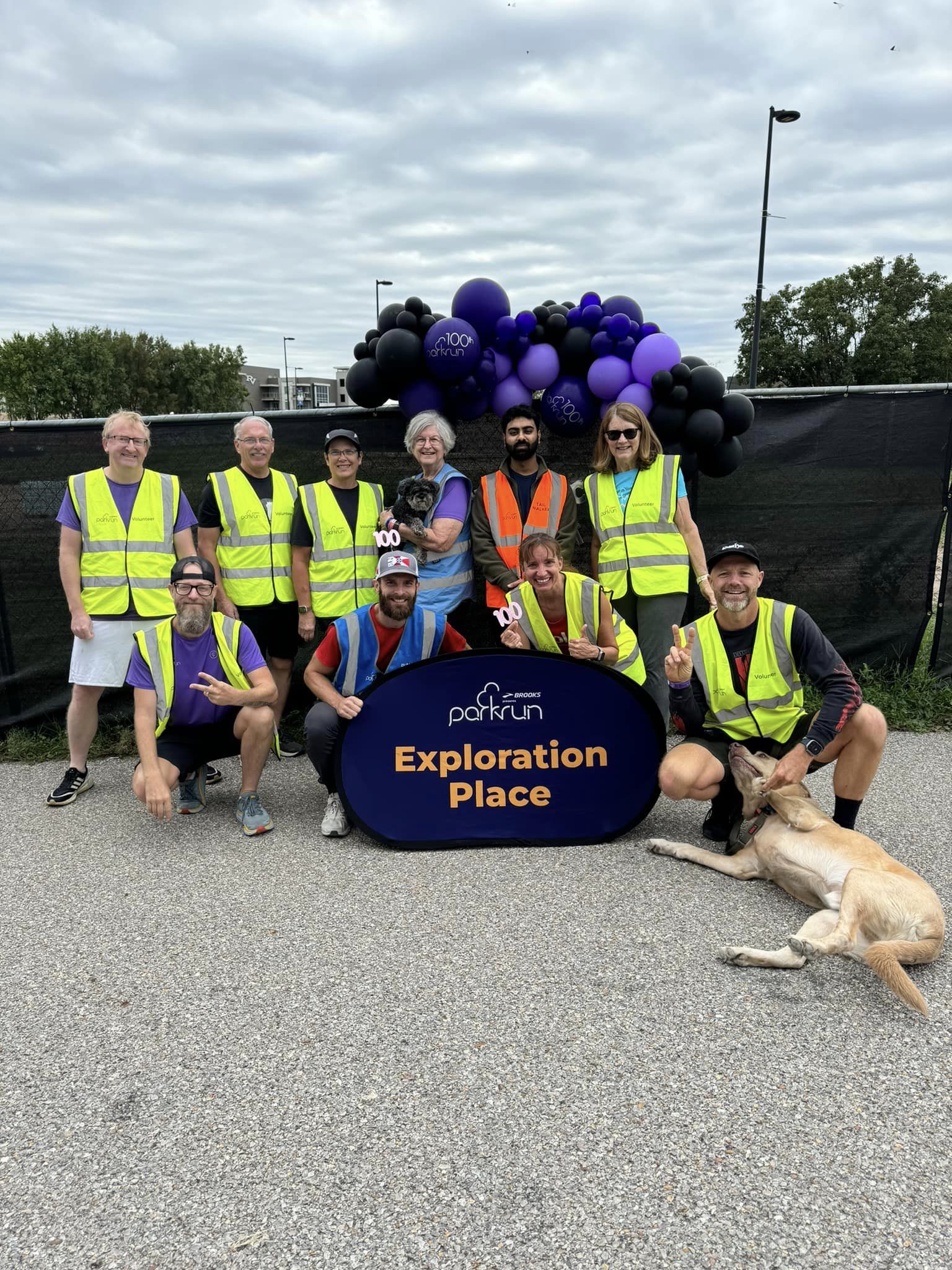
At each event, you’ll find runners and walkers, some pushing strollers, others with their dogs, all enjoying a picturesque course that follows the river, over the Keeper bridge, and back to the museum. The Exploration Place Parkrun recently celebrated its 100th run and will soon celebrate its second anniversary! Since its launch, we’ve seen the following:

  • Weekly average participants of 72
  • 15 of the past EP Parkruns have had more than 100 participants
  • 2,234 total registrations
  • 1,580 total participants
  • 7,103 total 5k finishes
  • 168 unique volunteers
  • 1,165 total volunteer occasions
  • Top five zip codes by registrations: 67203, 67212, 67205, 67226, 67208
  • Top five zip codes by number of 5k finishes: 67203, 67212, 67218, 67226, 67205

What exactly is a parkrun and why is it so popular?

Parkrun is a free, community event where you can walk, jog, run, volunteer, or spectate. The 5k (3.1 miles) event takes place every Saturday morning at various locations worldwide. It’s a positive, welcoming, and inclusive event with no time limit, ensuring no one finishes last.

Parkrun began in October 2004, founded by amateur club runner Paul Sinton-Hewitt in London, England. After an injury sidelined him from running, Paul organized a 5k time trial as a casual get-together with friends. Today, parkrun has expanded to over 2,300 locations in 22 countries, from the UK to Eswatini, Norway to New Zealand, spanning five continents.

Is it free to attend?

YES! Parkruns are free to attend, but it is recommended thatyou register to keep track of your runs, jogs, walks, or volunteering. Visit parkrun.us/register for more information.


Why is Parkrun good for you?

Participating in a weekly parkrun is beneficial for both physical and mental well-being. Walking, jogging or running helps improve cardiovascular health, build endurance, and maintain a healthy weight. Beyond the physical benefits, parkrun fosters a sense of community and belonging, offering a supportive and inclusive environment where everyone is welcome, regardless of fitness level. The social interaction and camaraderie can boost mood, reduce stress, and enhance overall mental health. Plus, the opportunity to volunteer or simply spectate allows for meaningful engagement and connection with others.

How to find other Parkruns when you travel?

You don’t have to skip a parkrun while traveling! With 74 parkruns across the United States, there’s likely one near your destination. Visit the parkrun.us website to use the events map or search box to find a nearby event. You can also download the free parkrun app, available for both iPhone and Android.

Come celebrate with us!

Save the date for the second anniversary of the Exploration Place Parkrun on Saturday, September 21 at 8:00 am. If you haven’t experienced a parkrun yet, this is the perfect opportunity to join in! Invite a friend and join the fun!

Running Doesn’t Have a Body Type

Running is a sport that welcomes everyone, regardless of shape, size, or fitness level. Yet, the stereotype of the “ideal runner’s body” often overshadows the diverse reality of who runners truly are. It’s time to embrace and celebrate all types of bodies in the running community.

The notion that only lean, muscular bodies can excel in running is outdated and can discourage many from even starting their running journey. The truth is, runners come in all shapes and sizes, each bringing their unique strengths and stories to the sport.

The Power of Diversity

Diversity in the running community enriches the sport. It shows that running is not just about speed or distance but about personal growth, health, and enjoyment. When we see runners of all body types, we are reminded that the ability to run is not confined to a specific look. In our local running groups and on our trails and paths, you are sure to meet a variety of runners with inspiring stories who defy stereotypes. From plus-size athletes completing marathons to older adults who started running later in life, these stories are proof-positive that the only requirement for being a runner is the desire to run.

Health Over Appearance

Running also offers numerous health benefits that are accessible to everyone. It improves cardiovascular health, boosts mental well-being, and fosters a sense of accomplishment. Focusing on these benefits and the love of the sport helps create a more inclusive and supportive environment.

Stopping Negative Thoughts

Running is a fantastic way to stay fit and clear your mind. But if we’re being honest, sometimes negative thoughts about your body can creep in and dampen the experience. Here are four strategies to help you stay positive and focused during your runs:

1. Focus on Your Breathing

When negative thoughts start to surface, shift your attention to your breathing. Concentrate on maintaining a steady and rhythmic pattern. This not only helps improve your running efficiency but also diverts your mind from unhelpful thoughts.

2. Set Clear Goals

Having a clear purpose for your run can be incredibly motivating. Whether you’re running to improve your fitness, relieve stress, or train for an event, reminding yourself of your goals can keep you focused and positive. Celebrate small milestones along the way to boost your confidence.

3. Use Positive Affirmations

Replace negative thoughts with positive affirmations. Instead of thinking, “I can’t do this,” tell yourself, “I am strong and capable.” Repeating positive statements can help build a more resilient and positive mindset, making your runs more enjoyable.

4. Listen to Music or Podcasts

Distracting yourself with your favorite music or an engaging podcast can make a huge difference. Create a playlist of upbeat songs or find a podcast that interests you. This can help keep your mind occupied and away from negative thoughts, making your run feel shorter and more enjoyable.

Do you have any favorite techniques or mantras that help you stay positive while running?

Remember, if you run, you are a runner—no matter what your body looks like.

Free Running Shoes for XC Athletes

To celebrate the upcoming cross-country season and support young runners, Run Wichita and Fartleks Running Shop have partnered to host a two-part Free Running Shoe Giveaway event!

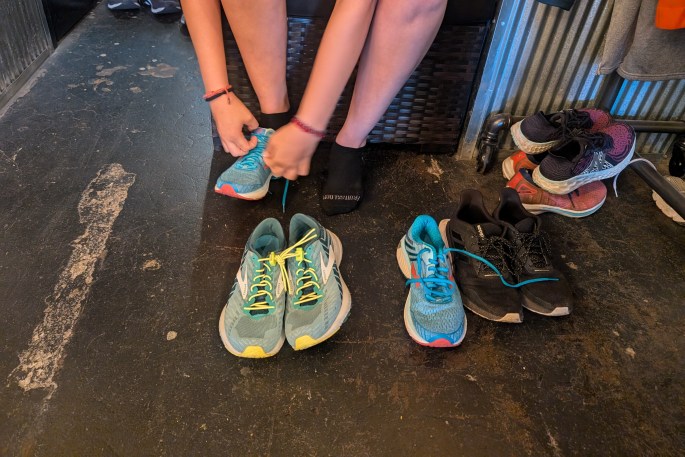
During our first giveaway event on August 4th, close to 30 students from Wichita and surrounding cities came in to Fartleks to receive a free pair of gently used running shoes. Members of the Run Wichita board were on hand to help sort the shoes and provide guidance to the students on proper fit.

There’s still time to get involved. Here’s everything you need to know:

Why We’re Doing This

Run Wichita believes that every athlete deserves the best gear to perform at their peak. Running shoes are crucial for preventing injuries and enhancing performance, and we want to ensure that these young runners have access to quality footwear.

Who Can Participate?

This giveaway is open to all high school cross country athletes in Wichita and surrounding areas. Whether you’re a seasoned runner or just starting out, we want to support your journey.

How to participate and support:

  • Students in need: Our next giveaway event will be at Fartleks Running Shop on Friday, August 16 from 5 – 7 p.m.
  • Donations: If you would like to donate gently used running shoes, please drop them off at Fartleks. We especially need larger sizes for women and smaller sizes for men.

Thank you to everyone who has supported this giveaway. Let’s continue to help our local students have an amazing cross-country season and support their running journeys!

For questions or more information, contact Karlee Rose, president of Run Wichita, at kdrose18@yahoo.com.

Behind the Starting Line: How to Organize a Race

Race day can bring a lot of excitement, the adrenaline rush of the crowd, the pulsating music, and just an overall electrifying atmosphere. You ever wonder how much work is put in before the runners get to the starting line? From securing permits and sponsors to mapping out the course and ensuring participant safety, each step plays a crucial role in creating a memorable race day.

Karlee Rose, president of Run Wichita, gives us a glimpse behind the scenes into what makes races like our annual Moonlight Madness come to life for our local running community.

How far in advance should planning start?

KR: It depends on the race. For Run Wichita races, discussions start about 5-6 months in advance. For races that are more than a “fun run” and have a large attendance, 12 months would be the least.

How much does it cost to put on a race?

KR: The cost can vary depending on the purpose of the race, the swag, and the size of the event, so the larger the race, the higher the registration cost. Registration fees are typically the primary source of funding, unless you get sponsorships. For Run Wichita races, we focus on the community aspect of the races and covering the race costs. Races that want to gain profit or raise money for charity will need to have a higher registration fee or larger sponsorship. Early bird pricing for events encourages people to sign up in advance. For larger cities, this is up to a year in advance, but local races will open 3-6 months before race day.

How do sponsorships help?

KR: Partnerships and sponsorships can help a race financially or give services, products, volunteers, increase promotion, or whatever your race needs. For a race to grow in any way, partnerships and sponsors are needed. Our running community is very good at creating partnerships and helping each other out where we can.

How do you choose a race location and course?

KR: There are so many aspects that go into the decision: distance, terrain, scenery, road closures, and permits needed. Ideally, you want to choose a location that hasn’t been overused with past races. You can also get a course to be certified for other events, which a timing company will help with for a fee. This is why many certified races like to stick with the same course. If any changes are made to the course, even if there is construction, the course must be re-measured and re-certified.

What about the course conditions?

KR: Every race course needs to be checked several times leading up to the race, but specifically on the event day to take care of any needs or unforeseeable happenings, like obstacles. Weather is also a big factor for any race. Race plans should include a weather contingency plan. During the race, it’s important to make sure each participant has a great experience. This means waiting until the last participant crosses the line and making sure they have the same amenities as the first participant to cross the line. Clean up starts after that and it’s helpful to already have volunteers scheduled to help.

Do all races need permits from the city?

KR: Most races (if put on legally) will need to gain permits or permission of some kind. Run Wichita has chosen race locations where we do not need street closure permits, which is helpful. Permits depend on the type of race so if you are trying to organize a race, check with the local government early in the planning process. Races also need to have insurance coverage to protect the company or organizer of the event. All these things take time and money to obtain.

What about promotion and advertising?

KR: Clark Ensz (well-known Wichita race director) once told me that a person must see race information 7 times before they register, so promotion is important. People must know your race exists to sign up. I’ve always believed that word of mouth is the best form of advertising.

Time is important to a lot of runners. How do you time races?

KR: Race timing is a major cost of a race, but time and placement is what most participants want from these events. Timing companies are available and can offer other services for more fees to help free up some time and effort from the race organizers, like race photography, course certification, and results submission on certified courses.

What about medical and hydration stations?

KR: You can never have too many first aid or hydration stations, but the logistics behind it is the hard part. Finding the right location to standup the items, having enough tables, cups, water and fuel, finding volunteers to work the table for the duration you have it set up, and making sure volunteers know how to work an aid station are just a few things to coordinate.

How about the snacks or post-race treats?

KR: Food is my personal favorite part about a race! I think most participants have come to expect some sort of hydration and snack after they cross the finish line. The longer the race in distance, the more food participants expect. This is yet another cost that takes a lot of pre-planning. We chose to have food as a big part of our Moonlight Madness run because it helps bring people together and get to know each other.

Most runners love free swag! How do you decide what to offer?

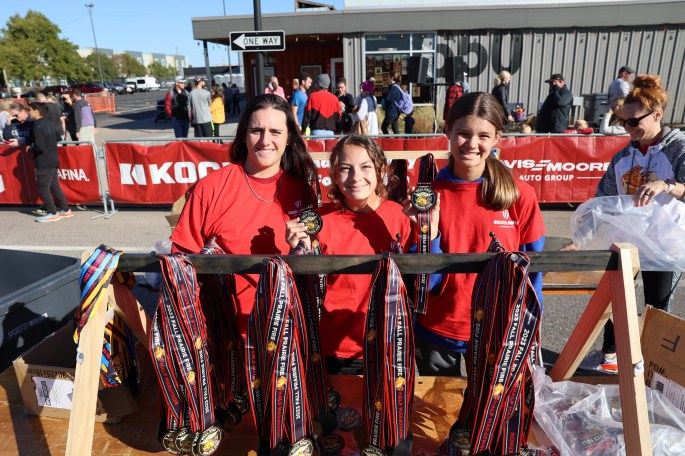
KR: This is an area that is hard to please everyone. Swag can often draw people to your race to take part or keep them coming back. But no matter what is offered, there will be complaints. Medals are the biggest crowd pleaser and staple for most races. T-shirts used to be the most common race swag, but now you see other apparel items, accessories, or practical and useful giveaways. Run Wichita has tried to stick with current trends for our race swag, but sometimes it’s hard to come up with something unique AND affordable.

Aside from medals, what about age division awards?

KR: I feel like age division recognition is always appreciated by participants. It can be a motivator and source of encouragement, and also keep participants coming back every year. Most races do 10-year divisions others do increments of five. Typically, there is some sort of “prize” that comes with the recognition, so this is another cost to consider. A timing company can sort out the age divisions.

Bathrooms are a must, right?

KR: Every race needs an adequate number of toilets! Sometimes restroom facilities will be available onsite but almost always portable toilets will need to be considered. In general, races should have 1 toilet for every 50 participants, but remember there will also be spectators to consider.

Let’s not forget about the volunteers!

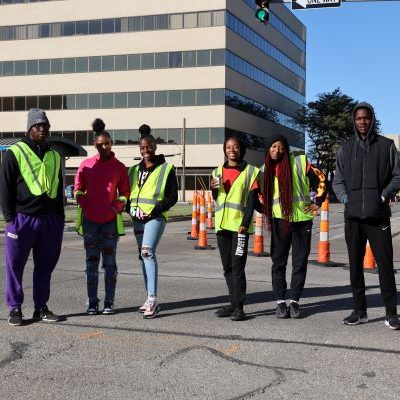
KR: Volunteers are the backbone of a race. Without them, the event doesn’t happen. But getting race volunteers can often be more difficult than participants. I think participants of races are always very good about being kind and showing gratitude to those that take time to volunteer.

Conclusion

Organizing a race requires careful planning and coordination to make sure the event runs smoothly and leaves a lasting impression on participants and spectators alike. Run Wichita would like to offer a big thank you to all our volunteers, partners, and sponsors who supported the Moonlight Madness race and other races within our community. If you’re not running a race, consider being one of the volunteers for an upcoming event and be a part of something special. See you at the starting line!

Wichita Celebrates Global Running Day

It’s Global Running Day and we’re celebrating in the city of Wichita! On Tuesday, June 4, the city of Wichita issued a proclamation in recognition of Global Running Day 2024, highlighting the city’s dedication to promoting physical activity and healthy living. Run Wichita board members were on hand to accept the proclamation on behalf of the entire running community in Wichita and surrounding cities. On Wednesday, June 5 at 6 pm Run Wichita and Fartleks Running Shop invites the community to a free social run and free smoothies in honor of Global Running Day. 

Global Running Day is a worldwide celebration of running that encourages people of all ages, backgrounds, and abilities to move. Formerly started as National Running Day in 2009, this global celebration of running annually sees millions of people across several countries pledging to run.

Wichita has a great running community, with several paths, trails, local races, and run/walk groups to support everyone’s ability and goals. You are also bound to find local community leaders walking or running through the city, to include Wichita’s mayor, Lily Wu. 

Mayor Wu has been recently participating in 5k races and says she enjoys walking and jogging through our beautiful city. Run Wichita asked her to share her thoughts in honor of Global Running Day.

Q: What does running mean to you?

Mayor Wu: I love to get out and experience our city and spend time with neighbors. Running also provides a sense of accomplishment and fulfillment. I hope to encourage more people to step out of their comfort zone and participate.

Q: Are there any life lessons you’ve learned from running?

Mayor Wu: Anyone can confront and overcome challenges as long as they commit to the achievement. In addition to cardiovascular health, running can also be very mentally healthy. 

Q: As Wichita’s mayor, what are your thoughts about our running community? 

Mayor Wu: I really appreciate our running community, promoting a positive and healthy activity, welcoming everyone, and helping build a united community. 

Thanks Mayor Wu and city council members for being an active part of our running community! 

To our friends in Wichita and surrounding communities, let’s run together on Global Running Day and beyond to celebrate our love for running as we progress toward healthier and more active lives. Let’s run as one – today and every other day!