Run Wichita Blog

Weird Weather

By Jen Smith

Weather’s weird, ya know?

I don’t just mean the spring severe weather shenanigans that blesses Kansas every year, though that certainly can make it challenging to squeeze a workout in before the thunderstorms flare up.

What’s weird to me is how just a few degrees of temperature variation can mean the difference between a great run and a terrible run. I have a knee that’s still a little cranky two years after a knee scope and it’s been frustrating to be limited to “just” 3 or 4 miles when all my pals are knocking out 8, 10, and more.

But a week ago, it was about 40 degrees on Saturday morning, and I had a glorious 4-mile run. Then I got to thinking back to another great run in March, and Garmin Connect tells me it was in the low 50s that morning. So what gives?

Although studies show mixed results, there is a weak correlation between the weather and joint pain. According to WebMD, it isn’t just the barometric pressure that affects joints, but also the temperature, humidity, and precipitation. The barometer may make tendons, muscles, and scar tissue expand and contract, leading to discomfort. (In a sample size of 1 — me — I can confirm this. 🤣) The synovial fluid in joints also can feel thicker at lower temperatures, making them feel stiffer.

The Orthopedic & Sports Medicine Center of Oregon has information across other weather patterns: 

  • Cold temperatures and joint stiffness: Cold weather reduces blood circulation, making joints and muscles feel tighter. This is particularly common for people recovering from knee replacements, hip replacements, or rotator cuff surgery.
  • Barometric pressure drops and inflammation: When the air pressure outside decreases (like before a storm), tissues inside the joints may expand, pressing on nerves and increasing pain.
  • High humidity and swelling: Warm, humid conditions may trigger fluid retention, leading to additional swelling in the knees, ankles, and wrists.
  • Extreme heat and joint fatigue: Heat waves can dehydrate the body, reducing joint lubrication and leading to stiffness or muscle cramps.

Honestly, we can have all those weather conditions in the same day in Kansas, right?

So it looks like 40-50 degrees is that sweet spot for my knee, and it might be a few months before I get a day like that again. But maybe I’ll get super nerdy this summer with the weather data and how my knee feels on runs to see if I can find more sweet spots. ‘Cause if there’s one thing I know about Kansas, the weather will continue to be weird.

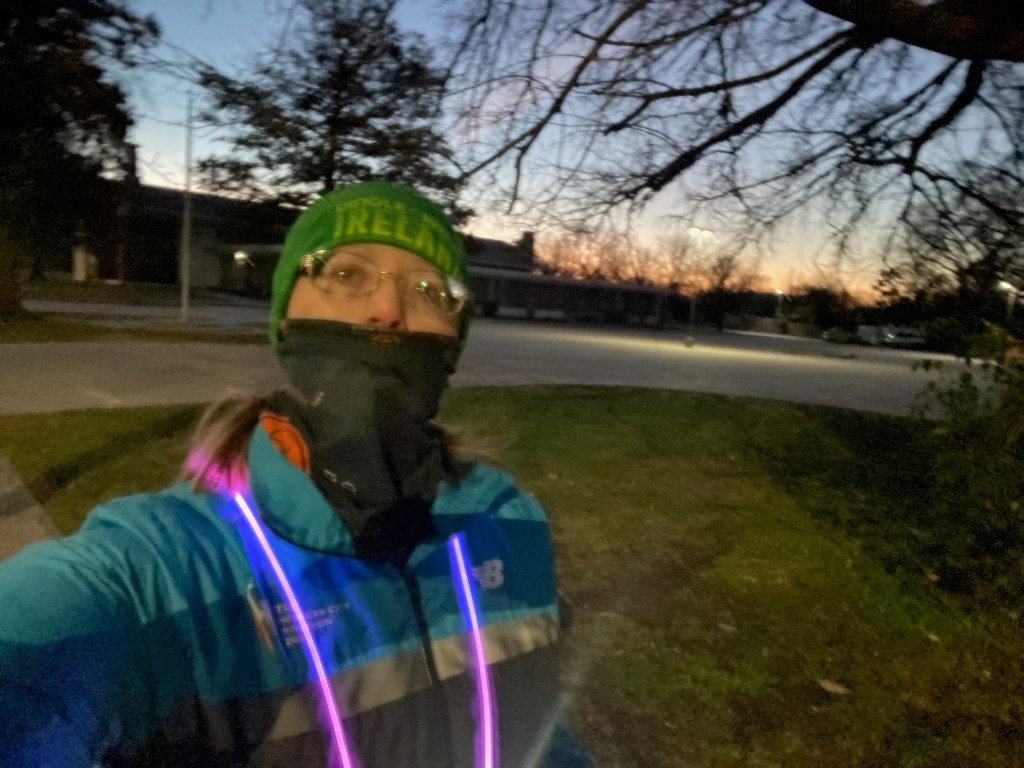
Not from my recent glorious chilly run, but still a chilly run.

The Prodigal Runner

And not many days after, the younger son gathered all together, journeyed to a far country, and there wasted his possessions with prodigal living. ~ Luke 15:13

I just felt like running. ~ Forrest Gump (c. 1994)

By David Abbott

Fifty years is a long time in the course of a human life, despite being less than a blip in the Grand Scheme of Things.

My geologic blip recently brought me back to Wichita to care for my aging mother after nearly half a century away, bringing into stark reality the old saw to “never say ‘never’,” because “never” is a long, long, loooong time.

My never was to never return to the place of my birth for more than a cursory visit every five years or so, but people get old and things change. The changes are often beyond our control, but one thing remains constant: Our need to find an organizing principal or a group to belong to that will positively impact our lives.

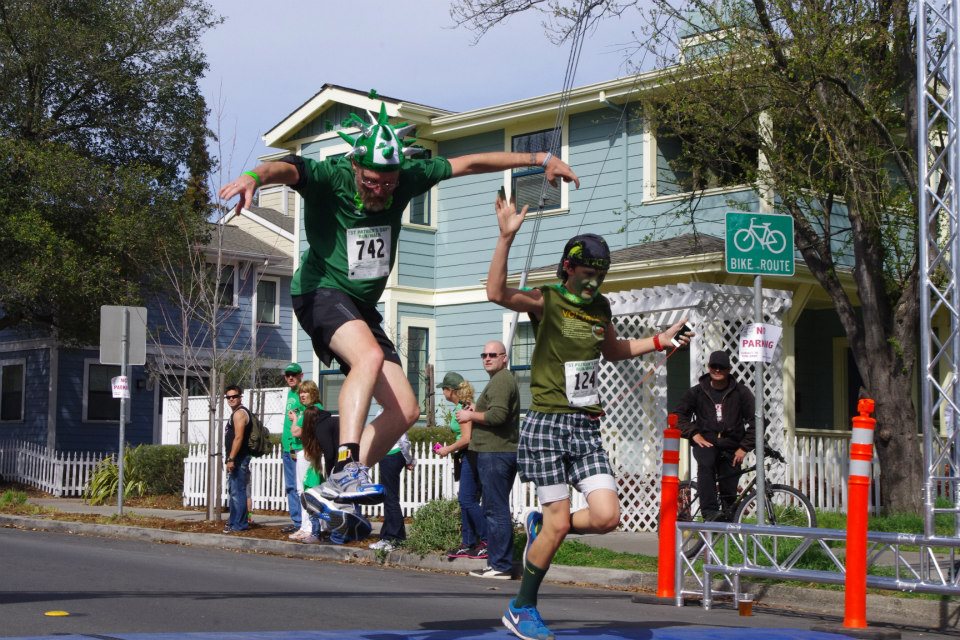
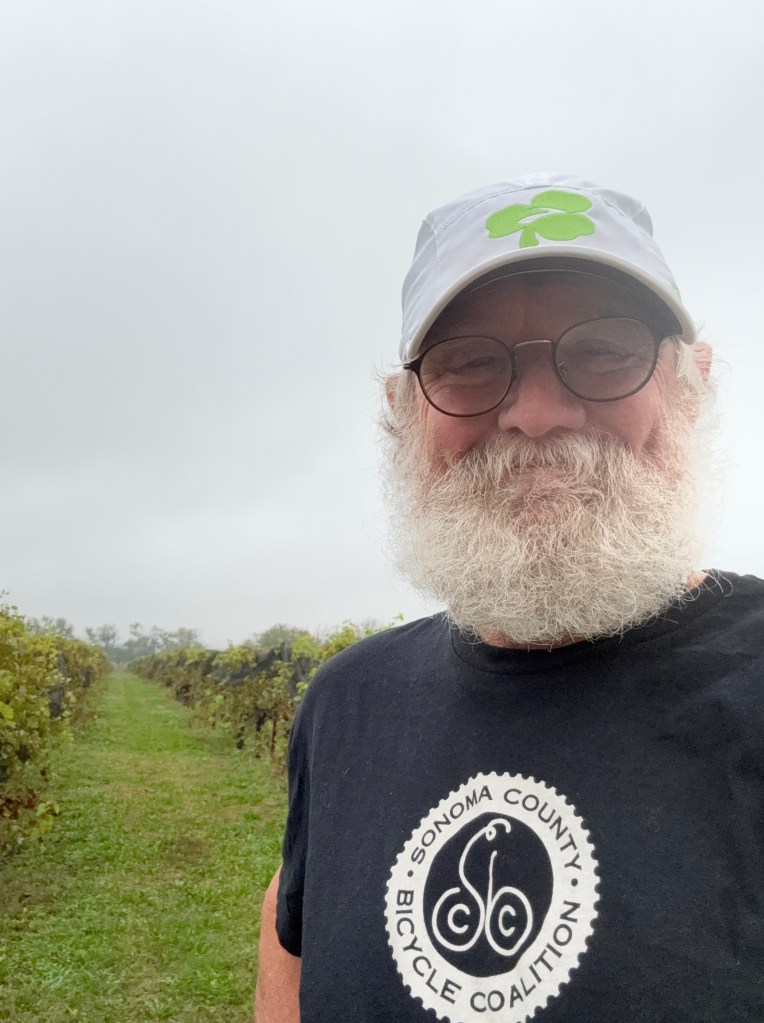
St. Patrick’s Day finish in Santa Rosa, California (c. 2013).

For many readers of this blog, the running community has become that positive reinforcement and a major part of our lives and personal culture.

Not unlike the Prodigal Son from the book of Luke, I too wandered away from home and squandered my fortune. I didn’t really have a fortune to squander, but for the sake of this metaphor, my life’s journey took me from the Southwestern desert to the Pacific Ocean to the Northern Plains, and finally, to the Wichita Running Club. No fortune involved.

I dropped out of East High School in 1977 with no chance I ever would have graduated in 1979. I borrowed money from a sibling and ran off to Arizona to live in the desert, far, far away from what I thought were my problems.

To my surprise, most of my problems came along with me, often in the form of delusion.

I spent the ensuing decades in Arizona, Northern California, returning to Arizona, and wintering in Central Wisconsin. Yes: From Tucson to Wisconsin on the first day of winter 2024. Prodigal sons usually don’t have the most logical timelines, to be honest.

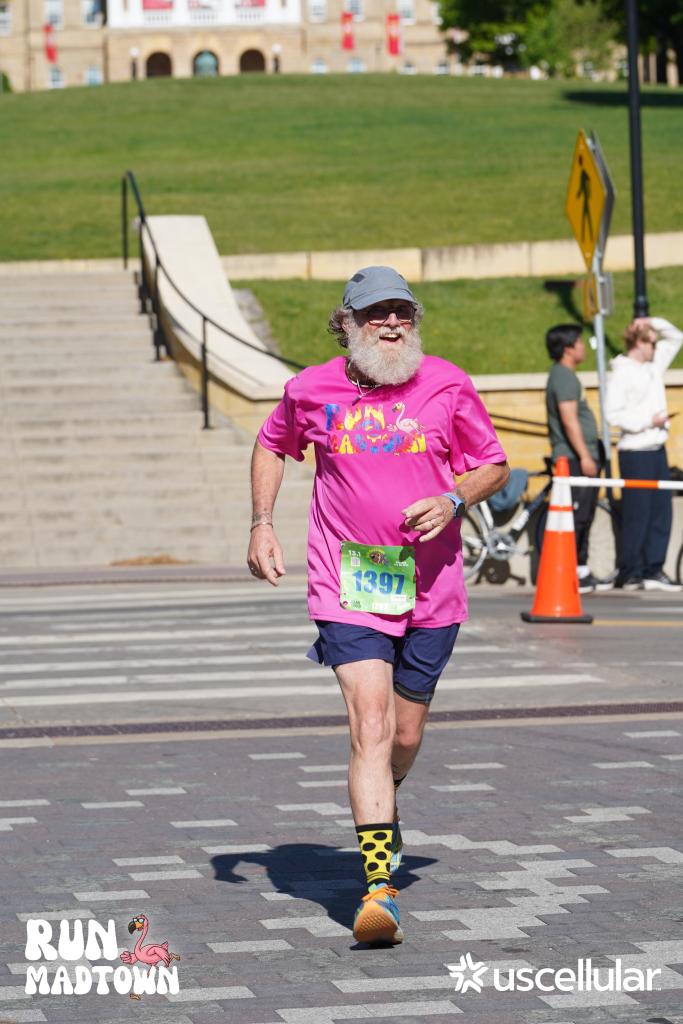
Run Madtown Half Marathon, Madison, Wisconsin, 2025.

Over the years, my relationship with Wichita mellowed. I didn’t see it as the root cause anymore, but it was not one of my great destinations or a place that I ever felt the desire to live again. It was more a family chore.

But this is about running and not a psychoanalysis of the writer, so when I considered moving back, Exploration Place parkrun helped softened the blow quite a bit. I figured that any city with a parkrun must have a dedicated running community, and I have not been disappointed. The regulars at parkrun, the organizers and volunteers, have been kind and welcoming and accepting of my odd choices in running couture.

When I began running 14 years ago at the age of 51, I did not realize what an important part of my life the social aspect of our sport would become, particularly given my transient lifestyle. As an organizing principle, running creates a solid community of like-minded people committed to self-improvement, or at least maintaining a good baseline of health. 

Sometimes, we run because we can’t afford mental health care, but that’s a different blog post.

I often think of organized running in the same way I think of going to a bar or a party celebrating life achievements or sporting events. Like the old TV show “Cheers,” we meet up with our “regulars,” in this case usually the people lining up at the start line that we’ve made casual connections to. We exchange pleasantries and occasionally expand relationships to non-race running or coffee and doughnuts after. When the running is over, we go our separate ways and the social contract ends but the feeling of camaraderie remains.

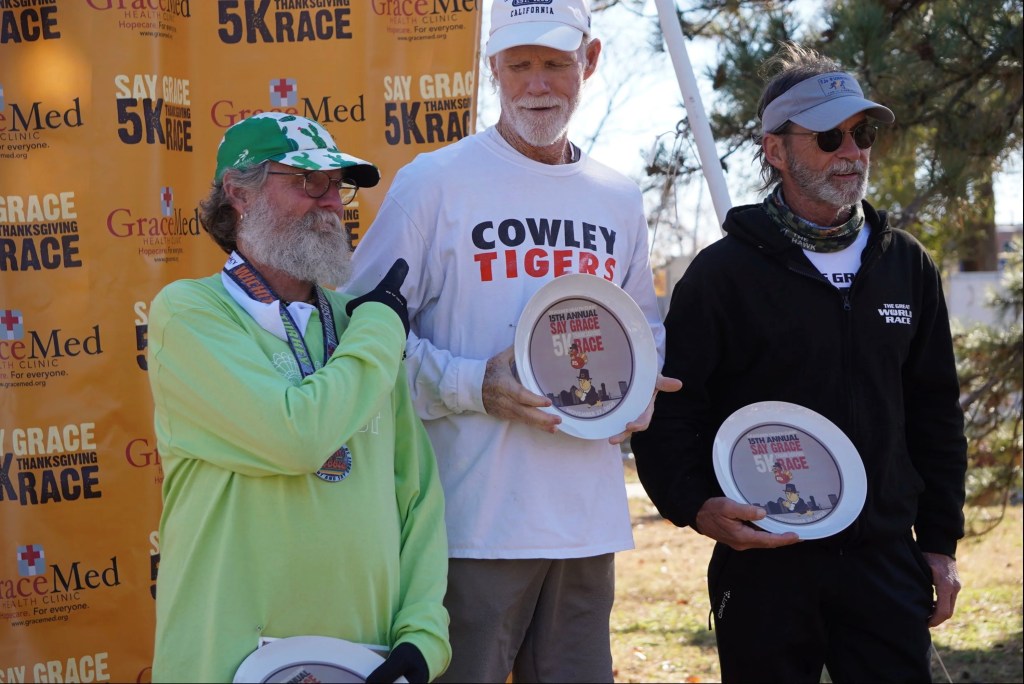
That dynamic is already paying off dividends for me in Wichita. At the finish line of the Say Grace 5K Race last November, a random runner approached me and said, “I recognized your shorts from the Turkey Trot.”

I think that would be a good thing to put on my tombstone: He may not have left much of a mark, but someone recognized his shorts at the Turkey Trot.

On the podium in Wichita.

Thanks to the running community, I can wear my rainbow tie-dye shorts with polka-dot or argyle socks and a pink “Run Madtown” shirt and not be considered an outsider.

I’ve also found a few friends and fellow travelers through parkrun, a global community and social phenomenon that shows we can all get along for a few hours every week and make the world a better place, however briefly.

On further consideration, maybe instead of the Prodigal Son, I am one of the people following Forrest Gump in the 1994 movie, when Forrest does his coast-to-coast-to-coast run in order to deal with a profound sense of grief. I’m part of a larger community searching for something, but we cope by following a predetermined course regardless of how tired we become along the way.

The running community is just like peas and carrots and life is like a box of chocolates: You never know what you’re gonna get. 

Or, as Luke 32 might say: It was right that we should make merry and be glad, for your brother was dead and is alive again, and was lost and is found.

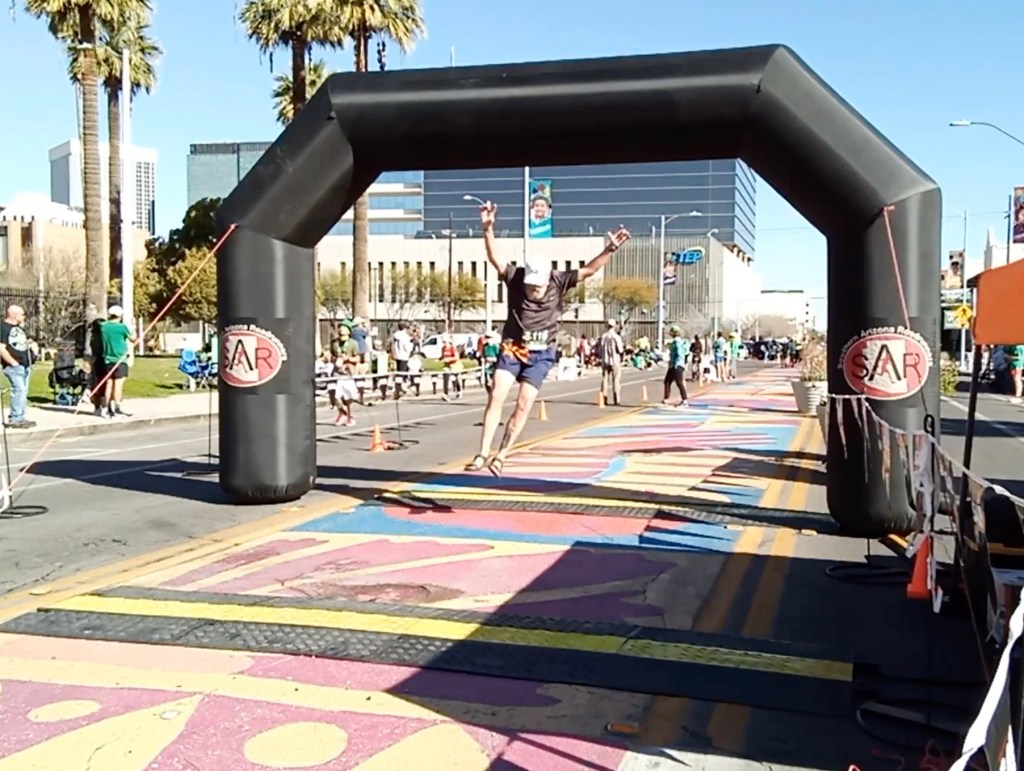
The author running in Tucson on St. Patrick’s Day 2024 the day he forgot his running shoes.

A labor of love: The KAKE-TV Wichita Marathon and the meeting that changed the marathon

By Mark Chamberlin

In May 1980, Clark Ensz organized and directed the Wichita Marathon. Clark and I had become friends in 1979, as I — inspired by the books of Jim Fixx and Dr. George Sheehan — went “all in” on distance running. Just weeks before the 1980 marathon, I wrote and produced a public service announcement (PSA) at KAKE-TV to promote the event. The 30-second ad was well-received, and Clark and I soon set our sights on a similar message for the next marathon, scheduled for October 1981.

We scheduled a meeting with KAKE General Manager Martin Umansky to seek approval for a new series of on-air announcements. In the small second-floor conference room adjacent to Umansky’s office, we inserted a 3/4-inch U-matic videotape cartridge into a playback unit and played the 1980 PSA. After the piece finished, we asked if he and KAKE would be willing to support a similar effort for the 1981 race.

Martin replied, “Why don’t we just televise it, live, start to finish?”

Not knowing when to leave well enough alone, I chimed in, “Great, and I’m going to run it.”

Clark and I stepped out of the meeting and looked at each other, knowing neither of us had any idea how to produce a three-hour live broadcast.

Fortunately for us, KAKE had been aggressively pursuing sports broadcasting, including Wichita State University basketball and the Wichita Wings. These initiatives were led by station manager Ron Loewen. In another stroke of good luck, Loewen had just hired Darrell Ewalt, an up-and-coming sports producer who had spent time with the fledgling cable network ESPN. And thus the KAKE-TV/Wichita Marathon was born.

At a marathon planning meeting at Clark’s office near Douglas and McLean, Ewalt explained how he envisioned the three-hour coverage. He assembled a crew of 34 people, a helicopter, the relatively new microwave technology, a microwave-equipped truck, and a pickup truck with a microwave antenna to send in-race images up to the helicopter (SKY-10), then to the station and out to the audience. 

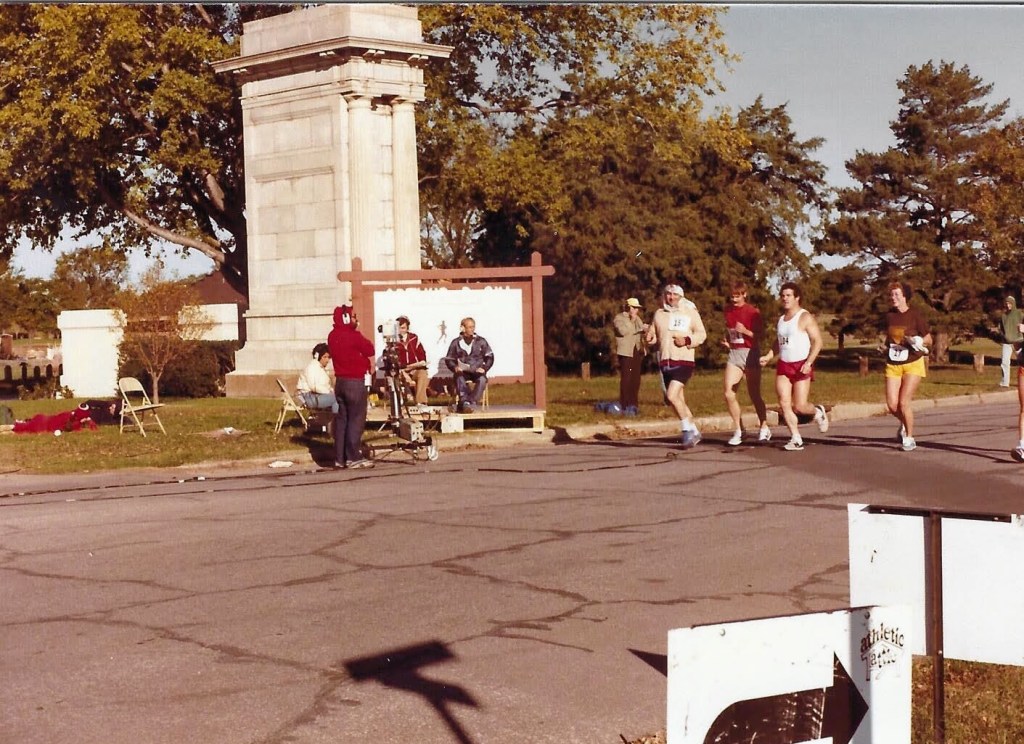
KAKE -TV representatives Steve Cless, director; Mark Chamberlin; and Stuart Volz, KAKE engineering, line up just before the start of the 1981 marathon. Volz is wearing a Bone Fone, a spandex-covered wearable neck radio that had speakers lying on the collarbones to conduct the sound through the bones, much like Shokz headphones.

On Sunday, Oct. 18, 1981, under sunny skies, then-Wichita police chief Richard Lamunyon fired the starter’s gun, and the live coverage was under way. Michael Hairston from Tulsa won the three-loop men’s race in 2:26:00, and Wichitan Jan Pearce took the women’s race in 3:17:26. There were 247 registered runners with 189 finishers, and broadcast history was made. One week later, ABC produced its first live coverage of the New York City Marathon.

In 1982, KAKE again provided live start-to-finish coverage. The technical highlight was a small wireless microphone wrapped around the chest of competitor Fred Torneden. Fred was intended to provide in-race commentary to give viewers a sense of the lead pack’s pace. However, after five miles, Torneden shed the mic near the broadcast field anchor desk at Amidon and Murdock. Despite the interruption, Torneden won the 1982 marathon in a state-record time of 2:18:08. Gary Gregory made a gut-wrenching effort to take second in 2:19:49, and Kathy Whitcomb set a new women’s state record of 2:48:37.

Broadcast HQ: Field anchor desk with Clark Ensz providing live play-by-play at the corner of Amidon and Murdock. The 1981 marathon was a 3-loop course in the Riverside neighborhood.

The 1983 KAKE-TV/Wichita Marathon featured a new course using Douglas Avenue and Central Riverside Park, finishing near the pitcher’s mound inside Lawrence-Dumont Stadium. Live television coverage was replaced that year by a 30-minute special, which aired Sunday afternoon, Oct. 18.

During the ensuing years, several different courses were used. In 1985, the event featured the St. Francis Mile for men and women, a one-mile race on Douglas Avenue. KAKE’s highlight special of the marathon and the St. Francis Mile eventually was added to the Museum of Broadcasting’s collection. By 1999, the marathon started in Derby and included a long stretch on McConnell Air Force Base, featuring a memorable run down the flight line and through a hangar housing a B-1B Lancer bomber.

The 1984 marathon featured a long stretch up Douglas Avenue to a College Hill turnaround.

Clark and I, along with photographer/editor Tim May, spent countless hours at KAKE producing these 30-minute highlight specials. After 32 years with the station — spanning news, promotion, and sales — I left KAKE in January 2005. I joined the advertising firm Armstrong|Shank (later Armstrong Chamberlin Strategic Marketing, and now AC Strategic Marketing) before retiring in May 2021. Today, I offer marketing and production services on a freelance basis. Clark continued to stage the Wichita Marathon until Oct. 10, 2010, when it transitioned to the Prairie Fire Marathon.

I remain proud of this “labor of love” and am grateful to Clark Ensz and the many others who support the Wichita running community. Most of all, I remain in awe of broadcast visionary Martin Umansky, who, in a single 15-minute meeting, changed the course of Wichita’s running history.

After a long stretch on McConnell AFB, runners circa 1999 exited the base by passing through a hangar housing a B-1 B Lancer bomber. Mark Chamberlin and photographer/editor Tim May are ready to record the video.

Photos courtesy of Mark Chamberlin.

Back of the Pack

By Jen Smith

Coming to a group run can be intimidating at first. Stepping out of your car, everyone is already chatting away, adjusting shoelaces and gear, knocking out a few dynamic stretches to warm up. But fear not — group runs are all about getting to know other runners in town.

And if you’re a slower runner? Don’t worry. There is always a Back of the Pack club to make sure no one is left behind. Some groups even outlaw the word “slow,” because what might be “slow” for one runner is my absolute sprinting-until-I’m-going-to-vomit pace.

At every Run Wichita group run, there will be a leader to make some announcements, discuss the route and water stops, and hand out maps, if necessary. Usually it is our certified coach, Angela Stateler, but other board members fill in when she can’t make it. That leader also keeps an eye out for new faces and tries to pair the newbie up with others who run at a similar pace. But don’t be afraid to speak up and ask who runs at your planned pace. It’s more fun to have someone to chat with on a run. Or someone to whine and complain with about the cold…or the heat…or the wind…

You don’t even have to run at a group run. I’m still slowly working my way back from some knee issues a year and a half ago, so sometimes I just show up to walk a few miles. Nor do you have to be up for whatever the posted mileage is. Don’t wanna run 10 miles on a Saturday morning? No problem — Angela usually gives suggestions on how and where to shorten a route. Or there’s always the option of doing an out-and-back along the route for whatever mileage you desire.

To find out when and where the group runs are, visit the Run Wichita — Community Group on Facebook or the Member Workouts page on RunSignUp.

And if you’re still worried about being slow, remember — you’re faster than everyone at home on the couch!

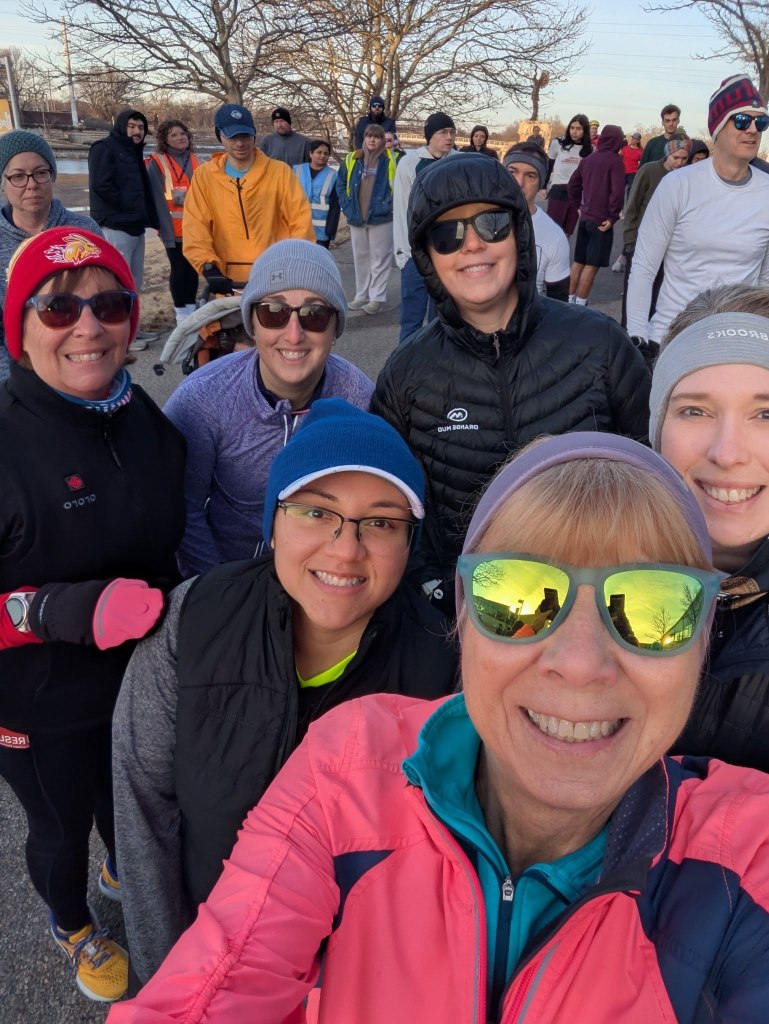
Photo by Terri Vanwey.

My first Annual 4-Mile Super Bowl Sunday Race

By David Abbott

As the calendar turns to February in the wake of the biggest storm of the season, Run Wichita is gearing up for the mid-winter race that will usher in the spring running schedule.

The 34th Annual 4-Mile Super Bowl Sunday Race takes place in the hours before Super Bowl LX, featuring an out-and-back course open to participants of all fitness levels, walkers and runners alike.

David Abbott

It can also serve as an excuse to lounge around in pajama pants later in the day and eat healthy snacks while the Seattle Seahawks take on the New England Patriots for the championship of American football and the coveted Lombardy Trophy.

According to Run Wichita lore, the race began in the late 1980s as the Frozen Nose Four-Mile, sponsored by Mountain High, a now-defunct outdoor sporting goods store near Rock Road and Central Avenue.

The increasingly popular run was halted in the early ’90s, though, when a foot of snow fell on that January day, leading to the cancelation of the event.

The store owners subsequently discontinued the race, leaving an opening in the race calendar. Run Wichita founding members Clark Ensz and Mark Chamberlain decided the race would be a good fit on Super Bowl Sunday, resurrecting it and keeping the 4-mile distance and the Linwood Park location.

This will be my first time participating in one of the iconic events on the Run Wichita calendar in the wake of my return to Wichita last summer. 

Since discovering running in 2012 at the age of 51, I’ve made it a point to join local running organizations to financially support them and get to know the people around me who share my strange obsession with the suffering and elation that is running.

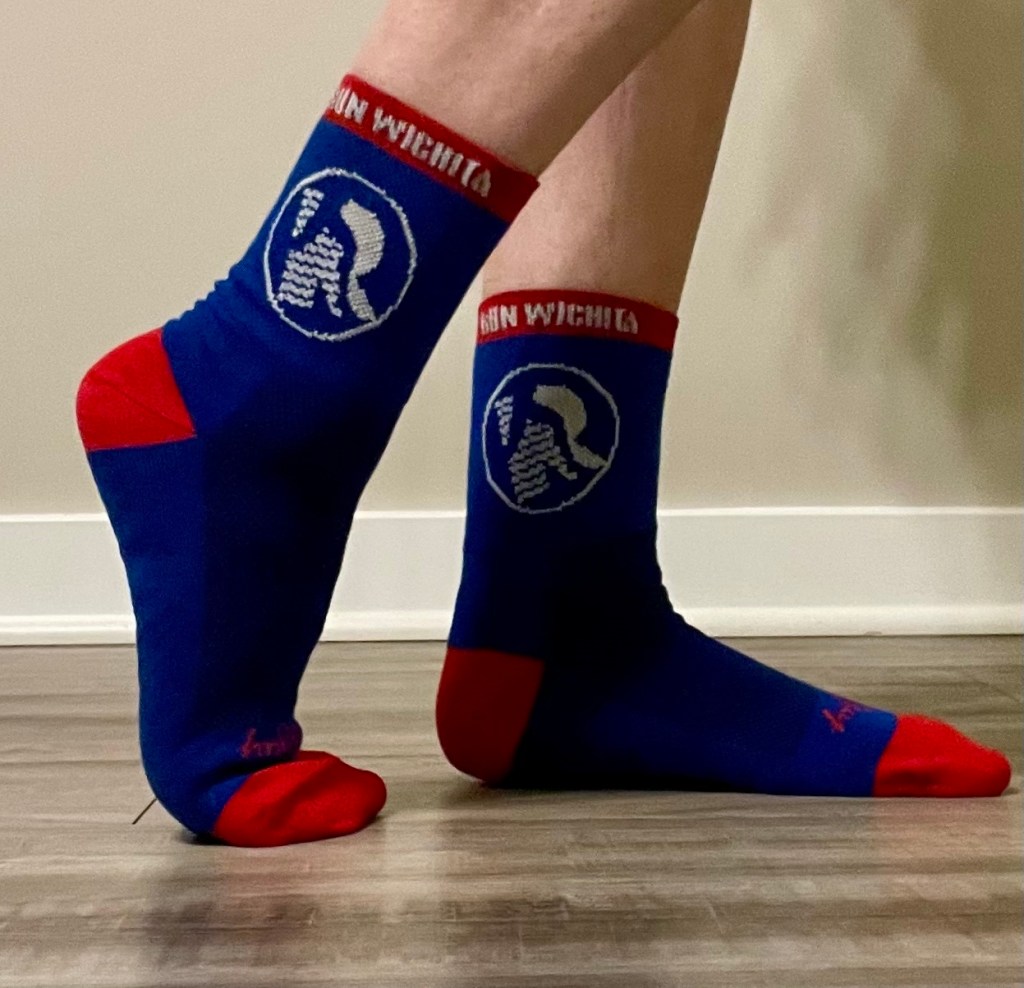
Super Bowl run swag — socks!

For me, every race is an opportunity to further submerge myself in local running culture and participate in a thriving community of dedicated runners of all ages and backgrounds.

As an added bonus, the 4-Mile Super Bowl Race features 50th Anniversary Run Wichita socks, offering another opportunity to get more running-related clothing for those of us who don’t have enough SWAG already.

The 34th Annual 4-Mile Super Bowl Sunday Race takes place at 2 p.m. Sunday, Feb. 8, at Linwood Park, 1901 S. Kansas St. Packet pick-up and in-person registration begins at 12:30 p.m. in the Linwood gym. There will be several merchant booths set up to browse and an opportunity to meet and hang out with other runners before the start of the race. 

For information or to sign up for the 34th Annual 4-Mile Super Bowl Sunday Race, go to www.runwichita.org or click on the link here.

Why Runners Run

Running is more than a sport. It’s a rhythm, a ritual, a release. Ask a dozen runners why they run, and you’ll get a dozen different answers—each deeply personal, yet universally resonant.

Here are a few universal reasons you may hear:

Mental Clarity

Many runners lace up their shoes not just to move their bodies, but to still their minds. The repetitive cadence of footfalls becomes a meditation. In the quiet of early morning or the hush of twilight, running offers a rare solitude—a space to think, to breathe, to reset.

Physical Strength

Running builds endurance, tones muscles, and strengthens the heart. But it also teaches resilience. Every mile conquered is a testament to persistence. Whether training for a marathon or jogging around the block, runners push past limits—proving that strength isn’t just measured in speed or distance, but in the will to keep going.

Community

Running connects people. From local 5Ks to global events like Global Running Day, the sport fosters camaraderie. Runners cheer each other on, share routes, swap stories, and celebrate milestones together. It’s a community built on shared sweat and mutual encouragement.

Purpose

Some run for causes—raising awareness, funds, or hope. Others run to mark personal victories: overcoming illness, grief, or self-doubt. Every runner has a story, and every run adds a new chapter.

Freedom

Running is accessible. No fancy gear required. No membership fees. Just you, your shoes, and the open road. It’s a celebration of movement, of being alive, of choosing your own pace and path.

The reasons we run are as varied as the terrain we cover. But at the core, runners run because it makes them feel more like themselves—stronger, freer, and more connected.

Why do YOU run? Focus on this answer the next time you are struggling with motivation or find yourself having a “bad” run.

Back to School Snacks: Time to Stock Up on Running Fuel!

As the school year kicks off, stores are brimming with deals—not just on notebooks and backpacks, but also on snacks. For runners, this is the perfect time to refresh your fueling strategy and stock up on nutritious, energizing bites that support your training.

Why Back-to-School Season Is Prime for Runners

Back-to-school promotions often include bulk discounts on healthy snacks, lunchbox staples, and portable foods. Whether you’re training for a fall race or just getting back into a routine, this is your chance to grab high-quality fuel without breaking the bank.

Top Running Snacks to Grab During Back-to-School Sales

These snacks are often discounted at major retailers like Target, Walmart, Costco, and Whole Foods during August and early September:

Energy & Protein Boosters

  • Granola Bars (e.g., Nature Valley, KIND, RXBAR): Great for pre-run fuel or post-run recovery.
  • Peanut Butter Crackers: Portable and satisfying, though best for post-run due to higher fat content.
  • Trail Mix: Look for mixes with nuts, seeds, and dried fruit—skip the candy-heavy ones. You can also buy them in boxes of individual packages, perfect for carrying during your run.

Fresh & Portable Produce

  • Bananas: Easy to digest and rich in potassium—ideal before or after a run.
  • Mandarin Oranges: Hydrating and mess-free.
  • Apples with Nut Butter: A classic combo for sustained energy.

Hydration Helpers

  • Coconut Water: Natural electrolytes without added sugars.
  • Chocolate Milk: A proven recovery drink with the right carb-to-protein ratio.
  • Hydration drink packs: great option to carry and add to your water bottles.

Smart Shopping Tips

  • Use shopping apps or website flyers to find local deals on snacks and groceries.
  • Check warehouse clubs and dollar stores for bulk snack packs—perfect for stocking up.
  • Look for school lunchbox-friendly items that double as great running fuel (e.g., string cheese, mini jerky, protein waffles).

Pro Tip: Think Like a Student

Just like kids pack snacks for energy between classes, runners need fuel between miles. Treat your pantry like a locker—stock it with smart, satisfying options that keep you going.

Happy snacking!

Boost Your Summer Runs with Inspiration and Mantras

Summer is upon us and the temperatures are already forecasted to be high and humid. This is also when many runners begin their training for fall races. The heat can be relentless, and the journey can feel long, but the right mindset can make all the difference. One powerful tool to keep you motivated and focused is the use of mantras and inspirational quotes. Here’s how you can incorporate them into your summer training routine.

The Power of Mantras

Mantras are short, powerful phrases that you repeat to yourself to stay focused and motivated. They can help you push through tough moments, maintain a positive mindset, and keep your goals in sight. Here are some tips on using mantras effectively:

  1. Choose Personal Mantras: Select phrases that resonate with you personally. It could be something as simple as “I am strong” or “Keep moving forward.”
  2. Repeat Regularly: Use your mantra during challenging parts of your run, such as uphill climbs or the final stretch. Repetition helps reinforce the message.
  3. Stay Positive: Ensure your mantra is positive and empowering. Avoid negative words or phrases that might undermine your confidence.

Inspiring Quotes to Keep You Going

Quotes from experienced runners and motivational figures can provide a boost of inspiration when you need it most. Here are some of my favorites:

  • “Run when you can, walk if you have to, crawl if you must; just never give up.” – Dean Karnazes
  • “The will to win means nothing without the will to prepare.” – Juma Ikangaa
  • “The miracle isn’t that I finished. The miracle is that I had the courage to start.” – John Bingham
  • “Put one foot in front of the other, and soon you’ll be crossing the finish line.” – Unknown

Integrating Mantras and Quotes into Your Training

  1. Daily Reminders: Write your favorite quotes and mantras on sticky notes and place them where you’ll see them often – on your mirror, fridge, or even your running shoes.
  2. Visualization: Before your run, take a moment to visualize yourself succeeding. Repeat your mantra and imagine yourself overcoming obstacles.
  3. During Runs: When you hit a tough spot during your run, repeat your mantra or recall a favorite quote. Let it drive you forward and remind you why you’re training.
  4. Post-Run Reflection: After your run, reflect on how your mantra or quote helped you. This reinforces its power and prepares you for the next challenge.

Conclusion

Training for fall races during the summer can be tough, but with the right mindset, you can turn the heat into an ally rather than an adversary. Mantras and inspirational quotes are powerful tools to keep you motivated, focused, and positive. Choose the ones that resonate with you, integrate them into your routine, and let them guide you through your training journey.

Remember, every step you take brings you closer to your goal. Keep moving forward, stay strong, and never give up. Happy running!

Morning Miles vs Sunset Strides: Which is best for summer?

Summer is a beautiful time to run—longer days, vibrant scenery, and a sense of freedom in the air. But with rising temperatures, runners often face a key question: Should I run in the morning or the evening? Both times have their perks and challenges, and the best choice often depends on your goals, schedule, and how your body responds to heat.

Let’s break it down:

Morning runs: the early bird advantage

Pros:

  • Cooler temperatures: Early mornings (before 8 a.m.) are usually the coolest part of the day, making it easier to avoid heat exhaustion.
  • Boosted energy & mood: Running in the morning can kickstart your metabolism and release endorphins that keep you energized and positive all day.
  • Fewer distractions: There’s less traffic, fewer people, and fewer interruptions—perfect for focused training or peaceful solo runs.
  • Consistency: Morning runners often find it easier to stick to a routine before the day’s responsibilities pile up.

Cons:

  • Harder wake-up uall: If you’re not a morning person, getting out of bed early can be a struggle.
  • Stiff muscles: Your body may feel tighter and less limber right after waking up.
  • Limited time: You might be rushing to fit in a run before work or other obligations.

evening runs: sunset miles & stress relief

Pros:

  • Warmer muscles: Your body is more awake and flexible, which can reduce injury risk and improve performance.
  • Stress relief: Running after a long day can help you decompress and clear your mind.
  • More social opportunities: Evening runs are often when group runs or running clubs meet.
  • Flexible timing: You’re less likely to be rushed, allowing for longer or more relaxed runs.

Cons:

  • Higher temperatures: Evenings can still be hot, especially in areas with high humidity.
  • Crowded paths: Parks and trails may be busier after work hours.
  • Potential for skipping: Fatigue or unexpected plans can derail your evening run.

So, Which Should You Choose?

There’s no one-size-fits-all answer. Here are a few tips to help you decide:

  • Choose Mornings if you’re training for a race that starts early, want to beat the heat, or need a consistent routine.
  • Choose Evenings if you prefer a more relaxed pace, enjoy social runs, or want to unwind after work.

You can also mix it up! Try morning runs on weekdays and evening runs on weekends—or alternate based on the weather forecast.

Final Thoughts

Whether you’re chasing sunrises or sunsets, the most important thing is to listen to your body and stay safe. Hydrate well, wear breathable gear, and don’t be afraid to adjust your pace or schedule when the heat is intense.

What’s your favorite time to run in the summer—and why? Share your thoughts in the comments!

Celebrate Global Running Day: 8 Fun Ways to Join

Mark your calendars for Global Running Day on Wednesday, June 4!

Every year, runners around the world lace up their shoes on the first Wednesday in June in a worldwide celebration of movement, motivation, and community. 

Global Running Day is more than just a large-scale group run; it’s a chance to remind ourselves why we run—to feel good, challenge ourselves, connect with others, and sometimes, simply enjoy the fresh air. If you’re wondering how to participate, here are some fun and meaningful ways to celebrate:

1. Go for a Run (Any Distance Counts!)

The simplest way to honor the day is to hit the pavement, trail, treadmill, or track. It doesn’t have to be long or fast—just moving your body in a way that feels good to you is what it’s all about.

2. Join a Local or Virtual Running Event

Check the social media pages for Run Wichita and other local running clubs, or running stores for events planned for Global Running Day. Many organizations also host virtual events, so you can join a global community from wherever you are.

3. Make It Social

Invite a friend, coworker, or family member to run with you—even if they’re new to it. Running together is a great way to build connections and share encouragement.

4. Try a New Route or Terrain

Break out of your routine by exploring a new trail, neighborhood, or park. Changing scenery can make your run feel fresh and exciting.

5. Share Your Run on Social Media

Snap a sweaty selfie or a scenic shot and share it with the hashtag #GlobalRunningDay. You might inspire someone else to join the movement!

6. Reflect on Your Running Journey

Take a moment to journal or post about why you run. Is it for health, peace of mind, competition, or fun? Reflecting on your “why” can deepen your appreciation for the sport.

7. Give Back

Donate to a running charity or volunteer at a local race or running club. You can also gift a pair of running shoes to someone in need through programs with Run Wichita or Girls on the Run Heart of Kansas.

8. Celebrate with a Runner’s Reward

Finish your run with your favorite treat or recovery activity—be it a smoothie, a long stretch, or a nap. You’ve earned it.

No matter how you choose to celebrate, Global Running Day is a great reminder that running is for everyone. Fast or slow, long or short—every step counts. So lace up, get out there, and celebrate the joy of running with millions across the globe.

Happy Global Running Day!