Ultrarunning Is Less Running, and More of Everything Else

By Cassandra Walter

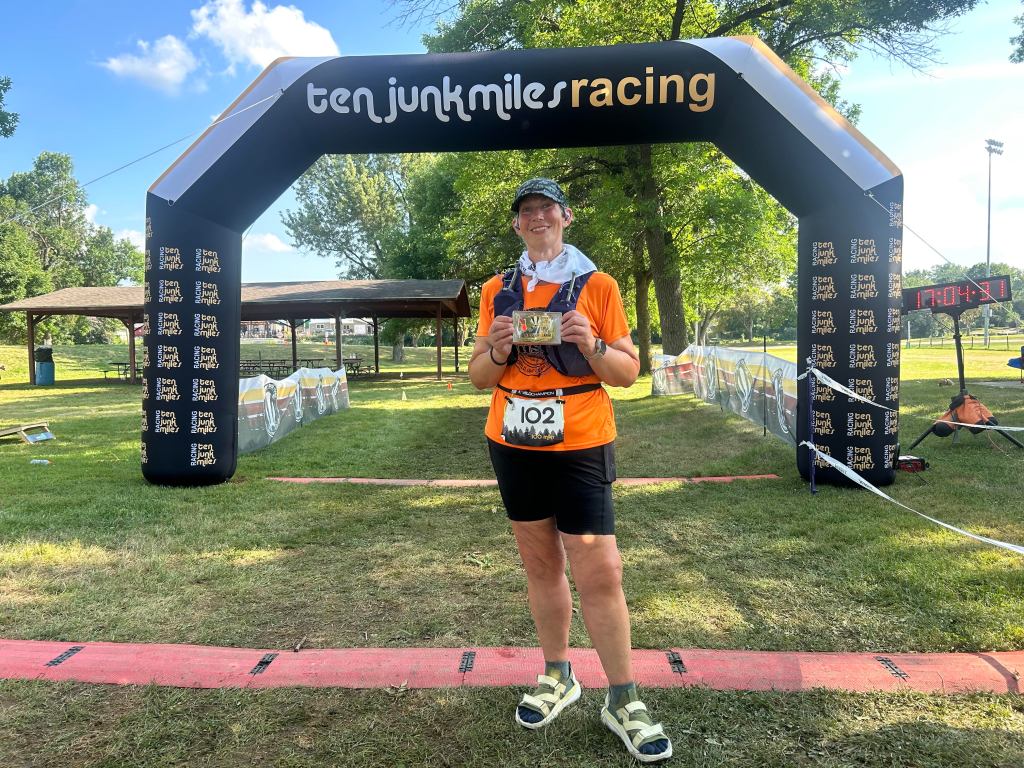
In August, I finished my first “proper” 100-mile ultra (101.1 miles, to be precise). When you start running ultras, you quickly learn that every distance comes with an asterisk.

Like many runners, I found my way here one race at a time: 5K, 10K, half marathon, marathon, 50K … and then, somehow, 100 miles.

I’ve been training for this race since November, which gave me a lot of time to think about why I wanted to do something that sounded objectively ridiculous. Especially on the mornings when I was tired, sore, or wondering why my weekends had become centered around running for hours and consuming alarming quantities of doughnuts.

I expected that a 100-mile race would teach me about endurance.

Instead, it taught me something else.

Ultrarunning isn’t primarily about running. It’s about solving an endless series of problems while continuing to move forward.
The Path to the Starting Line

Long before race day, the planning begins.

Training for an ultra isn’t simply about running more miles. It’s about preparing your body—and your mind—to handle challenges before they happen.

It means back-to-back long runs on weekends, so your body learns what “running on tired legs” actually feels like.

It means finding ways to stay motivated when the excitement of signing up has worn off, but race day is still months away.

For me, that’s where the doughnuts come in.

Eventually, taper arrives, along with everyone’s favorite, taper crazies.  How could I possibly think I could run 100 miles when even 2 or 3 feel like garbage?

Race week is equal parts excitement and anxiety.

I’ve learned to remind myself that anxiety isn’t a sign that something is wrong. It’s a sign that I’m about to do something I care deeply about.

The work is already done, and the hay is in the barn. Now it’s time to find out how good the training really was.

The Race You Planned For … and the One You Get

Race morning arrived with pouring rain and relentless wind. Fortunately, ultrarunners practice how we play.

Rain.

Snow.

Heat.

Cold.

Tired.

Sore.

If you only train when conditions are perfect, perfect conditions become another requirement for success.

The first challenge is pacing.

No matter how good you feel, don’t go out too fast (do what I say, not what I actually do). 

One piece of advice I keep coming back to is:

Your slowest mile matters more than your fastest mile.

I’d rather move efficiently for 80 miles than run 10 great ones and spend the last 20 shuffling toward the finish.

And then, sooner or later, the race begins asking questions.

Maybe it’s the weather.

Maybe it’s blisters (So. Many. Blisters.)

Maybe your stomach suddenly decides calories are optional.

Maybe you need to change socks.

Often, you’re running on no sleep, with all the associated hallucinations (here’s looking at you, weird balloon man).

The one thing you can expect is that the unexpected will happen.

The Question Everyone Asks

At some point—usually with a discouraging number of miles still remaining—I always have the same thought.

Why did I sign up for this sh&%?
Almost every ultrarunner has this conversation with themselves.

The suffering is real.

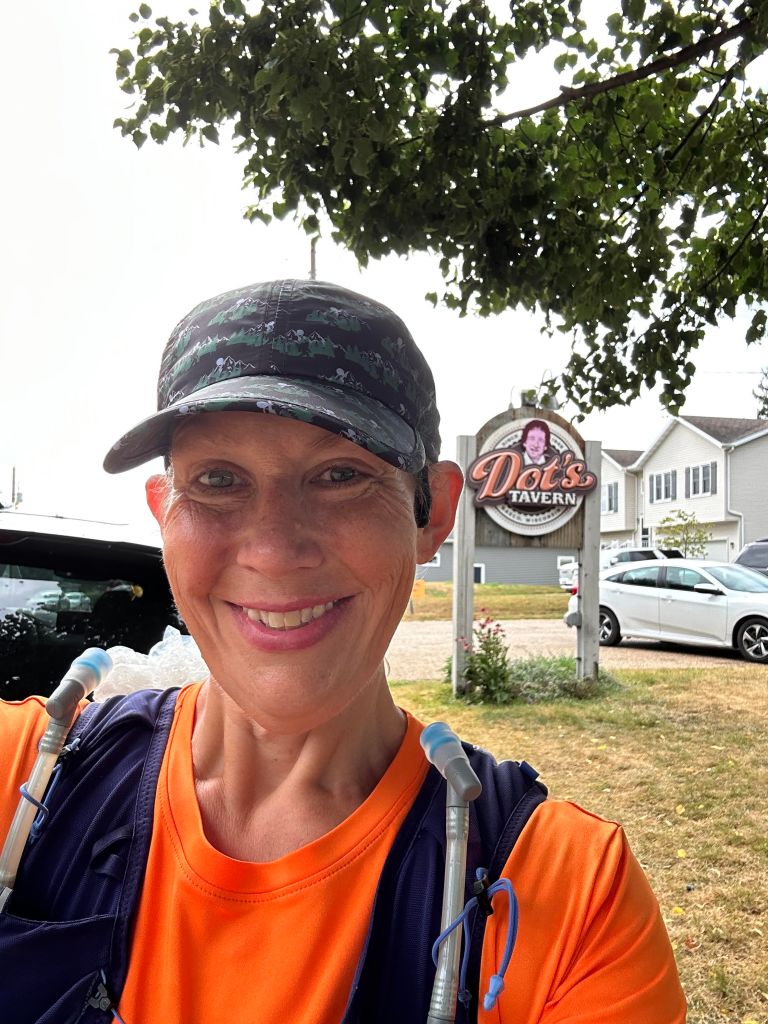
By the final 8 to 10 hours of this race, everything hurt, and I wanted to take my toys and go home.  

But one phrase has become incredibly important to me:

It never always gets worse.

Sometimes you walk for a while.

Sometimes you eat.

Sometimes you change socks.

Sometimes you convince yourself to run to the next tree … then the next mailbox … then the next aid station.

During this race I rallied several different times.

I went back to running intervals.

I power-hiked well.

I kept eating.

I kept drinking.

Most importantly, I kept solving the next problem instead of worrying about all the problems still ahead. Did I do it perfectly? Absolutely not. I made plenty of mistakes in this race, but my goal is to learn and improve for next time.

What Makes Ultras Different?

People often ask why anyone would voluntarily run this far. The obvious answers are true. Ultras have gorgeous scenery, a fantastic running community, and amazing volunteers. The aid stations alone are worth it, stocked with everything from mashed potatoes to grilled cheese to ramen. This race had Dr. Pepper slushies! What a time to be alive.    

And yes, cool belt buckles.

Honestly, the value for your race entry is unmatched. We get to enjoy all those race perks for much, much, much longer than anyone else. 

But I don’t think the defining feature of ultrarunning is distance.

It’s the constant decision-making, made harder by the suffering that we come to expect in these events.

Every hour brings another question.

Am I drinking enough?

Do I need to change socks?

Should I play GI roulette with this burrito?

It’s like playing chess while your body steadily becomes less willing to cooperate.

Building the Toolkit

The long, hot, humid training runs in the Kansas sun serve a critical purpose. Each one contributes to your race day toolkit. 
Some tools are physical. Heat training, endurance, gut-training. Learning what gear works and what doesn’t. Others are mental. Patience, flexibility. Keeping things moving even when the run feels like hot garbage.

Training teaches us to accept setbacks without letting them become failures.

The longer I run ultras, the less I think they’re actually about running.

They’re about learning how to respond when things stop going according to plan.

Those aren’t just running skills.

The Paradox

During every ultra, there comes a point where I question everything about my choices.

I almost always have another race on the calendar already, and I’m kicking myself for thinking I could voluntarily do this not once, but twice. I briefly consider becoming a cyclist … a hiker … a sourdough bread enthusiast.

Anything but this.

Then something funny happens.

As the finish line comes into view, I somehow find enough energy to run again.

Not long after crossing it, I’m already scrolling through UltraSignup, shopping for another race.

I haven’t forgotten how hard it was.

I remember the rain.

The fatigue.

The blisters.

The hours where every step hurt.

But I also remember something else.

I remember that I kept solving one problem after another until there weren’t any miles left.

Finishing 101.1 miles didn’t convince me that I’m unusually tough. It reminded me that almost every difficult challenge can be broken into one smaller problem.

Eat something.

Change your socks.

Walk for 5 minutes.

Run to the next aid station.

Repeat.

That’s true at mile 92.

And, I’ve found, it’s true in a lot of other places in life too.
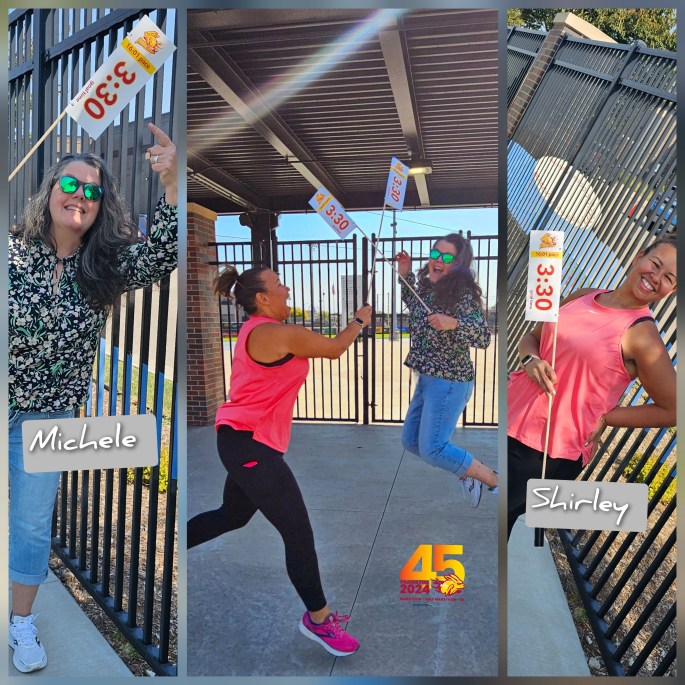
Meet the “Slow and Steady” Pacers for Prairie Fire!

Whether you’re aiming for a personal best or just to finish strong, pacers offer the motivation and guidance you need. In this blog post, Run Wichita introduces first-time pacers Michele Davis and Shirley Pitts Wanjau, who will be leading the “slow and steady” group for the Prairie Fire half marathon’s 3:30 goal time. These dedicated ladies plan to ensure every runner feels supported and motivated.

RW: What inspired you to start running?

Michele: My wonderful husband! In October 2015, he wanted to join a running group and kindly asked me to come with him to the meeting, so I’d understand how much time he’d be putting into it. At the meeting they mentioned a walking group, and I was quickly hooked. By January 1st, 2016 I was running my first half marathon, “The Hangover Half.” As of today, I’ve completed about 10 or so half marathons, I think. Running has been such a glorious journey for me that it all runs together, like one long dance party!

Shirley:  I started running 10 years ago. I wanted to show that fat girls can run too! We may be a little slower, but we can run! It was also for health reasons. My doctor said I needed to lose weight to have a baby, and I successfully met that goal. To date, I’ve completed four half marathons.

RW: What inspired you to become a race pacer?

Michele: My running friend, Shirley. She’s so encouraging and has such a positive attitude. I can’t imagine I would have ever done anything like this without her support.

Shirley: During my first half marathon, I was probably third from the last and wanted to cry because I was all by myself. There was nobody around for miles. I ended up going in the wrong direction until someone caught me and turned me around. When I finished the race, there was no one there to cheer for me except my husband and the race workers and volunteers who had to be there. It was that loneliness that inspired me to reach out to Prairie Fire and persistently pursue a 3:30 pacer, because there’s never been one. 

RW: Why is this particular pace important to you?

Michele: My mom would sometimes drive into town, park a few miles from work, and walk to work. People would stop and ask if they could give her a ride. She’d say, “No, thank you. I’m out here for the health of it!” I hope I can inspire others who might like to run just for the health of it, not for a trophy. It’s also nice to be towards the back of the pack in case anyone gets hurt, so I can help.

Shirley: When I first started running, I was doing a 17-minute mile. I have since dropped it all the way down to a personal record of a 12-minute mile during one of the Exploration Place Parkruns. I am putting all that work aside for now because leading a slower pace for others is so important to me.

RW: How do you prepare both physically and mentally for pacing a race?

Michele: Consistency is the key to training. This will be my first time pacing, so I’m very nervous. I hope the morning of the race I can be calm and simply trust all the work I put into it. It will be strange having people rely on me for a pace, though. 

Shirley: Consistency is key. Also, surround yourself with likeminded people who, when you’re feeling your lowest, will push you through. This is important, because there ARE going to be days when you’re NOT going to want to do this.

RW: What’s the biggest challenge you’ve faced while training to be a pacer, and how did you overcome it?

Michele: Getting up at 4:30am so frequently to train! Ugh! The big smile on the face of my running friend, Shirley, every morning is the only way I was able to overcome that struggle.

Shirley: Pacing isn’t a challenge for me; that just comes naturally, because I’ve always been slow and steady. The challenge for me was consistency, and that’s when surrounding myself with like-minded people helped. I found people who ran the same pace as me, and we formed our group, (Slow and Steady), to keep all of us accountable. It gave us partners who ran the same pace as us, so we wouldn’t keep being left behind. 

RW: What advice would you give to someone considering running their first half marathon?

Michele: Be consistent with your training. On race day, try your best to be calm and don’t get caught up with people who run faster than you. Starting off too fast is the worst thing… just the worst.

Shirley: Running doesn’t discriminate. Running is all sizes, all colors, all shapes, all paces. It is running straight through or at intervals. Walking is a tremendous accomplishment as well. Be YOU, and just show up! 

RW: What are you most looking forward to as a pacer for this race?

Michele: Supporting the people who are relying on me, to the very best of my ability.

Shirley: When the 3:30 group passes that finish line, it will be official that the Prairie Fire Half Marathon has 3:30 race pacers. It will be an acknowledgment that 3:30 runners are SEEN – that we deserve to be here.

Conclusion:

Run Wichita appreciates Michele and Shirley’s dedication to the local running community, especially for slower-paced runners. They demonstrate that leading with patience and consistency is truly rewarding.

If you consider yourself a slow and steady runner, remember to look for Shirley and Michele at the Fall Prairie Fire race on Sunday, October 13th, 2024.
For more information about the race, visit prairiemarathon.com.

Remember, every runner’s journey is unique, and there’s no shame in seeking help to make your race day memorable and enjoyable. So, lace up your shoes, find your pacer, and let them lead you to the finish line with confidence and pride. Happy running!

Behind the Starting Line: How to Organize a Race

Race day can bring a lot of excitement, the adrenaline rush of the crowd, the pulsating music, and just an overall electrifying atmosphere. You ever wonder how much work is put in before the runners get to the starting line? From securing permits and sponsors to mapping out the course and ensuring participant safety, each step plays a crucial role in creating a memorable race day.

Karlee Rose, president of Run Wichita, gives us a glimpse behind the scenes into what makes races like our annual Moonlight Madness come to life for our local running community.

How far in advance should planning start?

KR: It depends on the race. For Run Wichita races, discussions start about 5-6 months in advance. For races that are more than a “fun run” and have a large attendance, 12 months would be the least.

How much does it cost to put on a race?

KR: The cost can vary depending on the purpose of the race, the swag, and the size of the event, so the larger the race, the higher the registration cost. Registration fees are typically the primary source of funding, unless you get sponsorships. For Run Wichita races, we focus on the community aspect of the races and covering the race costs. Races that want to gain profit or raise money for charity will need to have a higher registration fee or larger sponsorship. Early bird pricing for events encourages people to sign up in advance. For larger cities, this is up to a year in advance, but local races will open 3-6 months before race day.

How do sponsorships help?

KR: Partnerships and sponsorships can help a race financially or give services, products, volunteers, increase promotion, or whatever your race needs. For a race to grow in any way, partnerships and sponsors are needed. Our running community is very good at creating partnerships and helping each other out where we can.

How do you choose a race location and course?

KR: There are so many aspects that go into the decision: distance, terrain, scenery, road closures, and permits needed. Ideally, you want to choose a location that hasn’t been overused with past races. You can also get a course to be certified for other events, which a timing company will help with for a fee. This is why many certified races like to stick with the same course. If any changes are made to the course, even if there is construction, the course must be re-measured and re-certified.

What about the course conditions?

KR: Every race course needs to be checked several times leading up to the race, but specifically on the event day to take care of any needs or unforeseeable happenings, like obstacles. Weather is also a big factor for any race. Race plans should include a weather contingency plan. During the race, it’s important to make sure each participant has a great experience. This means waiting until the last participant crosses the line and making sure they have the same amenities as the first participant to cross the line. Clean up starts after that and it’s helpful to already have volunteers scheduled to help.

Do all races need permits from the city?

KR: Most races (if put on legally) will need to gain permits or permission of some kind. Run Wichita has chosen race locations where we do not need street closure permits, which is helpful. Permits depend on the type of race so if you are trying to organize a race, check with the local government early in the planning process. Races also need to have insurance coverage to protect the company or organizer of the event. All these things take time and money to obtain.

What about promotion and advertising?

KR: Clark Ensz (well-known Wichita race director) once told me that a person must see race information 7 times before they register, so promotion is important. People must know your race exists to sign up. I’ve always believed that word of mouth is the best form of advertising.

Time is important to a lot of runners. How do you time races?

KR: Race timing is a major cost of a race, but time and placement is what most participants want from these events. Timing companies are available and can offer other services for more fees to help free up some time and effort from the race organizers, like race photography, course certification, and results submission on certified courses.

What about medical and hydration stations?

KR: You can never have too many first aid or hydration stations, but the logistics behind it is the hard part. Finding the right location to standup the items, having enough tables, cups, water and fuel, finding volunteers to work the table for the duration you have it set up, and making sure volunteers know how to work an aid station are just a few things to coordinate.

How about the snacks or post-race treats?

KR: Food is my personal favorite part about a race! I think most participants have come to expect some sort of hydration and snack after they cross the finish line. The longer the race in distance, the more food participants expect. This is yet another cost that takes a lot of pre-planning. We chose to have food as a big part of our Moonlight Madness run because it helps bring people together and get to know each other.

Most runners love free swag! How do you decide what to offer?

KR: This is an area that is hard to please everyone. Swag can often draw people to your race to take part or keep them coming back. But no matter what is offered, there will be complaints. Medals are the biggest crowd pleaser and staple for most races. T-shirts used to be the most common race swag, but now you see other apparel items, accessories, or practical and useful giveaways. Run Wichita has tried to stick with current trends for our race swag, but sometimes it’s hard to come up with something unique AND affordable.

Aside from medals, what about age division awards?

KR: I feel like age division recognition is always appreciated by participants. It can be a motivator and source of encouragement, and also keep participants coming back every year. Most races do 10-year divisions others do increments of five. Typically, there is some sort of “prize” that comes with the recognition, so this is another cost to consider. A timing company can sort out the age divisions.

Bathrooms are a must, right?

KR: Every race needs an adequate number of toilets! Sometimes restroom facilities will be available onsite but almost always portable toilets will need to be considered. In general, races should have 1 toilet for every 50 participants, but remember there will also be spectators to consider.

Let’s not forget about the volunteers!

KR: Volunteers are the backbone of a race. Without them, the event doesn’t happen. But getting race volunteers can often be more difficult than participants. I think participants of races are always very good about being kind and showing gratitude to those that take time to volunteer.

Conclusion

Organizing a race requires careful planning and coordination to make sure the event runs smoothly and leaves a lasting impression on participants and spectators alike. Run Wichita would like to offer a big thank you to all our volunteers, partners, and sponsors who supported the Moonlight Madness race and other races within our community. If you’re not running a race, consider being one of the volunteers for an upcoming event and be a part of something special. See you at the starting line!