
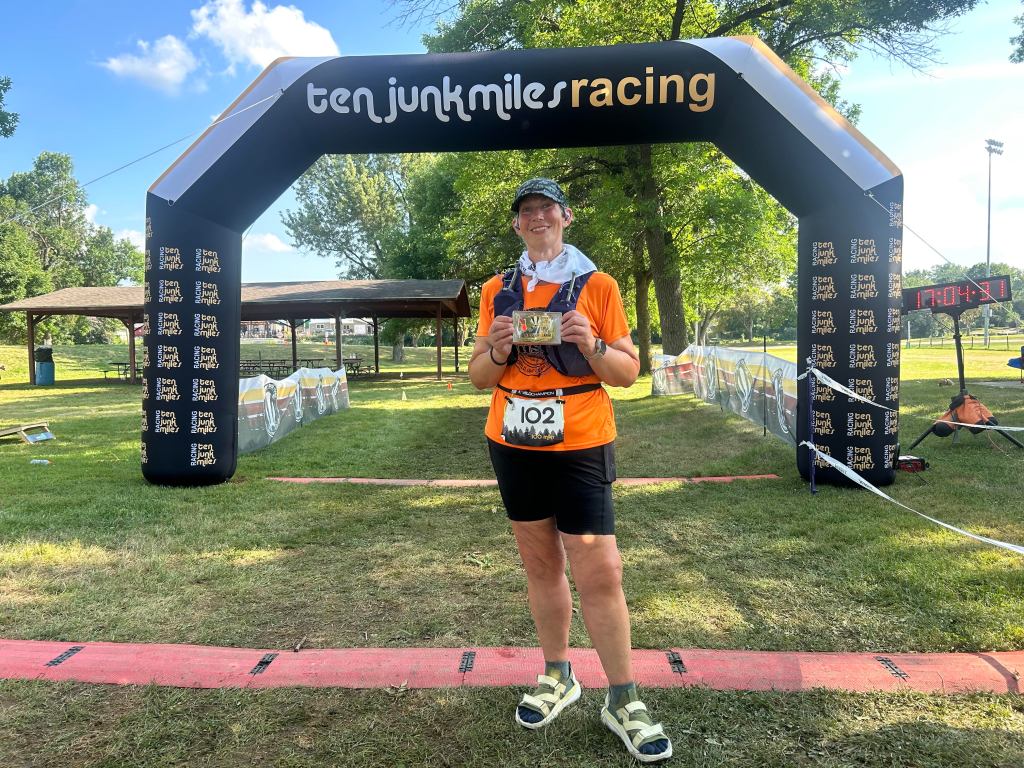
In August, I finished my first “proper” 100-mile ultra (101.1 miles, to be precise). When you start running ultras, you quickly learn that every distance comes with an asterisk.
Like many runners, I found my way here one race at a time: 5K, 10K, half marathon, marathon, 50K … and then, somehow, 100 miles.
I’ve been training for this race since November, which gave me a lot of time to think about why I wanted to do something that sounded objectively ridiculous. Especially on the mornings when I was tired, sore, or wondering why my weekends had become centered around running for hours and consuming alarming quantities of doughnuts.
I expected that a 100-mile race would teach me about endurance.
Instead, it taught me something else.
Ultrarunning isn’t primarily about running. It’s about solving an endless series of problems while continuing to move forward.
The Path to the Starting Line
Long before race day, the planning begins.
Training for an ultra isn’t simply about running more miles. It’s about preparing your body—and your mind—to handle challenges before they happen.
It means back-to-back long runs on weekends, so your body learns what “running on tired legs” actually feels like.
It means finding ways to stay motivated when the excitement of signing up has worn off, but race day is still months away.
For me, that’s where the doughnuts come in.
Eventually, taper arrives, along with everyone’s favorite, taper crazies. How could I possibly think I could run 100 miles when even 2 or 3 feel like garbage?
Race week is equal parts excitement and anxiety.
I’ve learned to remind myself that anxiety isn’t a sign that something is wrong. It’s a sign that I’m about to do something I care deeply about.
The work is already done, and the hay is in the barn. Now it’s time to find out how good the training really was.
The Race You Planned For … and the One You Get
Race morning arrived with pouring rain and relentless wind. Fortunately, ultrarunners practice how we play.
Rain.
Snow.
Heat.
Cold.
Tired.
Sore.
If you only train when conditions are perfect, perfect conditions become another requirement for success.
The first challenge is pacing.
No matter how good you feel, don’t go out too fast (do what I say, not what I actually do).
One piece of advice I keep coming back to is:
Your slowest mile matters more than your fastest mile.
I’d rather move efficiently for 80 miles than run 10 great ones and spend the last 20 shuffling toward the finish.
And then, sooner or later, the race begins asking questions.
Maybe it’s the weather.
Maybe it’s blisters (So. Many. Blisters.)
Maybe your stomach suddenly decides calories are optional.
Maybe you need to change socks.
Often, you’re running on no sleep, with all the associated hallucinations (here’s looking at you, weird balloon man).
The one thing you can expect is that the unexpected will happen.
The Question Everyone Asks
At some point—usually with a discouraging number of miles still remaining—I always have the same thought.
Why did I sign up for this sh&%?
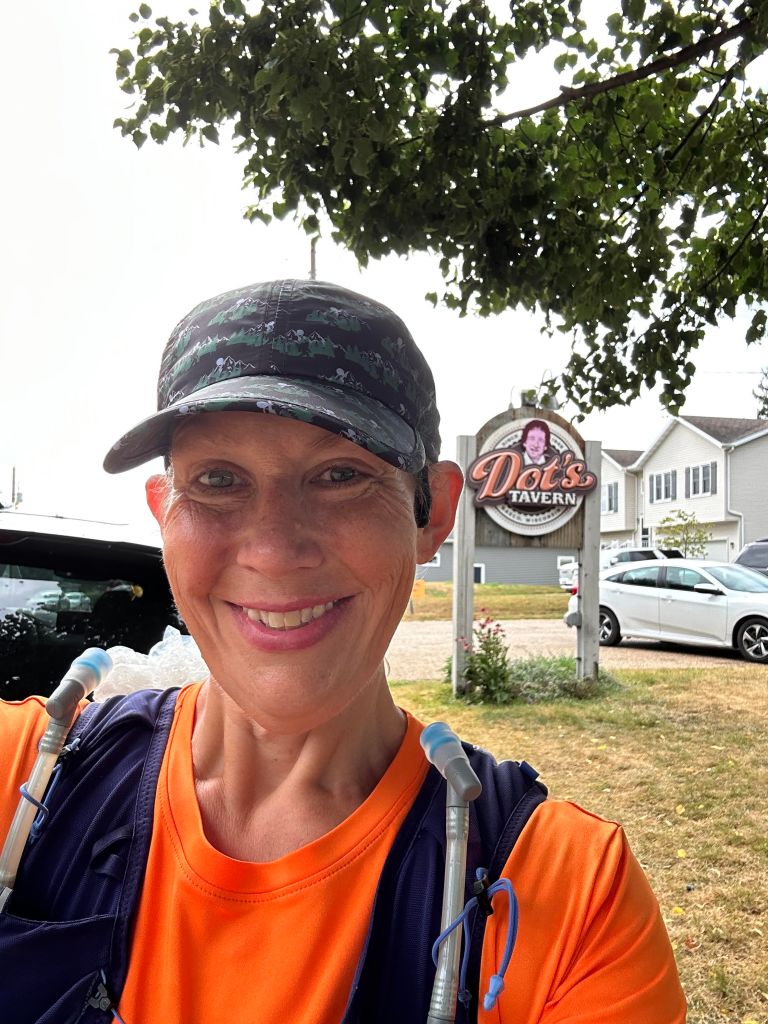
Almost every ultrarunner has this conversation with themselves.
The suffering is real.
By the final 8 to 10 hours of this race, everything hurt, and I wanted to take my toys and go home.
But one phrase has become incredibly important to me:
It never always gets worse.
Sometimes you walk for a while.
Sometimes you eat.
Sometimes you change socks.
Sometimes you convince yourself to run to the next tree … then the next mailbox … then the next aid station.
During this race I rallied several different times.
I went back to running intervals.
I power-hiked well.
I kept eating.
I kept drinking.
Most importantly, I kept solving the next problem instead of worrying about all the problems still ahead. Did I do it perfectly? Absolutely not. I made plenty of mistakes in this race, but my goal is to learn and improve for next time.
What Makes Ultras Different?
People often ask why anyone would voluntarily run this far. The obvious answers are true. Ultras have gorgeous scenery, a fantastic running community, and amazing volunteers. The aid stations alone are worth it, stocked with everything from mashed potatoes to grilled cheese to ramen. This race had Dr. Pepper slushies! What a time to be alive.
And yes, cool belt buckles.
Honestly, the value for your race entry is unmatched. We get to enjoy all those race perks for much, much, much longer than anyone else.
But I don’t think the defining feature of ultrarunning is distance.
It’s the constant decision-making, made harder by the suffering that we come to expect in these events.
Every hour brings another question.
Am I drinking enough?
Do I need to change socks?
Should I play GI roulette with this burrito?
It’s like playing chess while your body steadily becomes less willing to cooperate.
Building the Toolkit
The long, hot, humid training runs in the Kansas sun serve a critical purpose. Each one contributes to your race day toolkit.
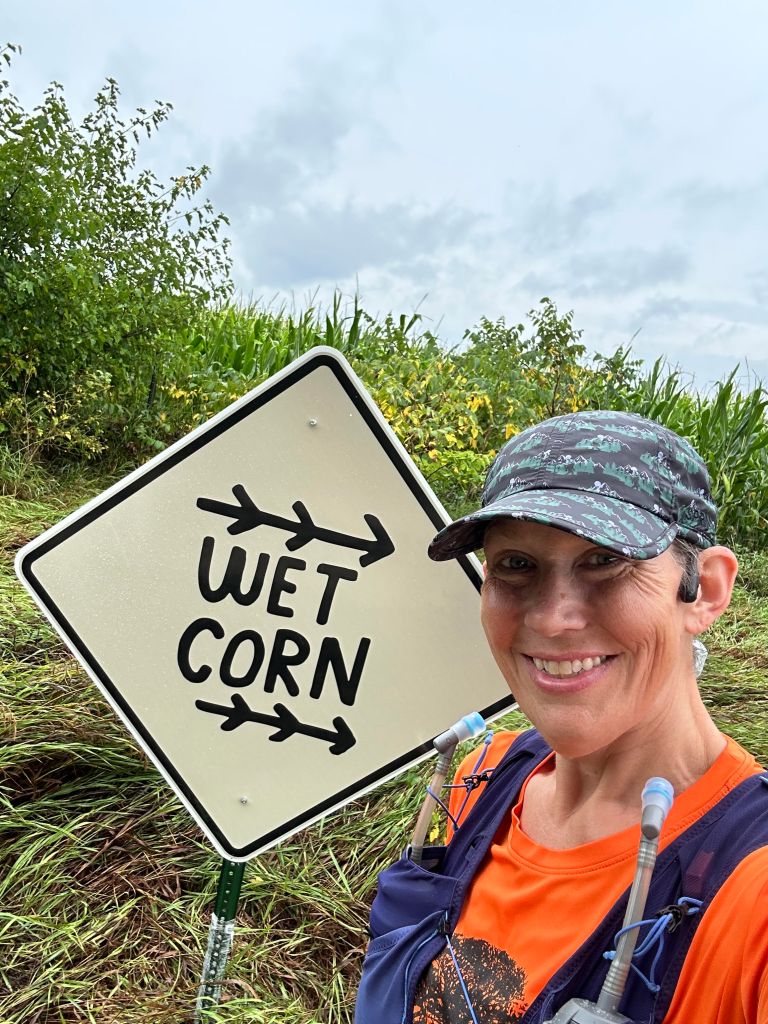
Some tools are physical. Heat training, endurance, gut-training. Learning what gear works and what doesn’t. Others are mental. Patience, flexibility. Keeping things moving even when the run feels like hot garbage.
Training teaches us to accept setbacks without letting them become failures.
The longer I run ultras, the less I think they’re actually about running.
They’re about learning how to respond when things stop going according to plan.
Those aren’t just running skills.
The Paradox
During every ultra, there comes a point where I question everything about my choices.
I almost always have another race on the calendar already, and I’m kicking myself for thinking I could voluntarily do this not once, but twice. I briefly consider becoming a cyclist … a hiker … a sourdough bread enthusiast.
Anything but this.
Then something funny happens.
As the finish line comes into view, I somehow find enough energy to run again.
Not long after crossing it, I’m already scrolling through UltraSignup, shopping for another race.
I haven’t forgotten how hard it was.
I remember the rain.
The fatigue.
The blisters.
The hours where every step hurt.
But I also remember something else.
I remember that I kept solving one problem after another until there weren’t any miles left.
Finishing 101.1 miles didn’t convince me that I’m unusually tough. It reminded me that almost every difficult challenge can be broken into one smaller problem.
Eat something.
Change your socks.
Walk for 5 minutes.
Run to the next aid station.
Repeat.
That’s true at mile 92.
And, I’ve found, it’s true in a lot of other places in life too.

